
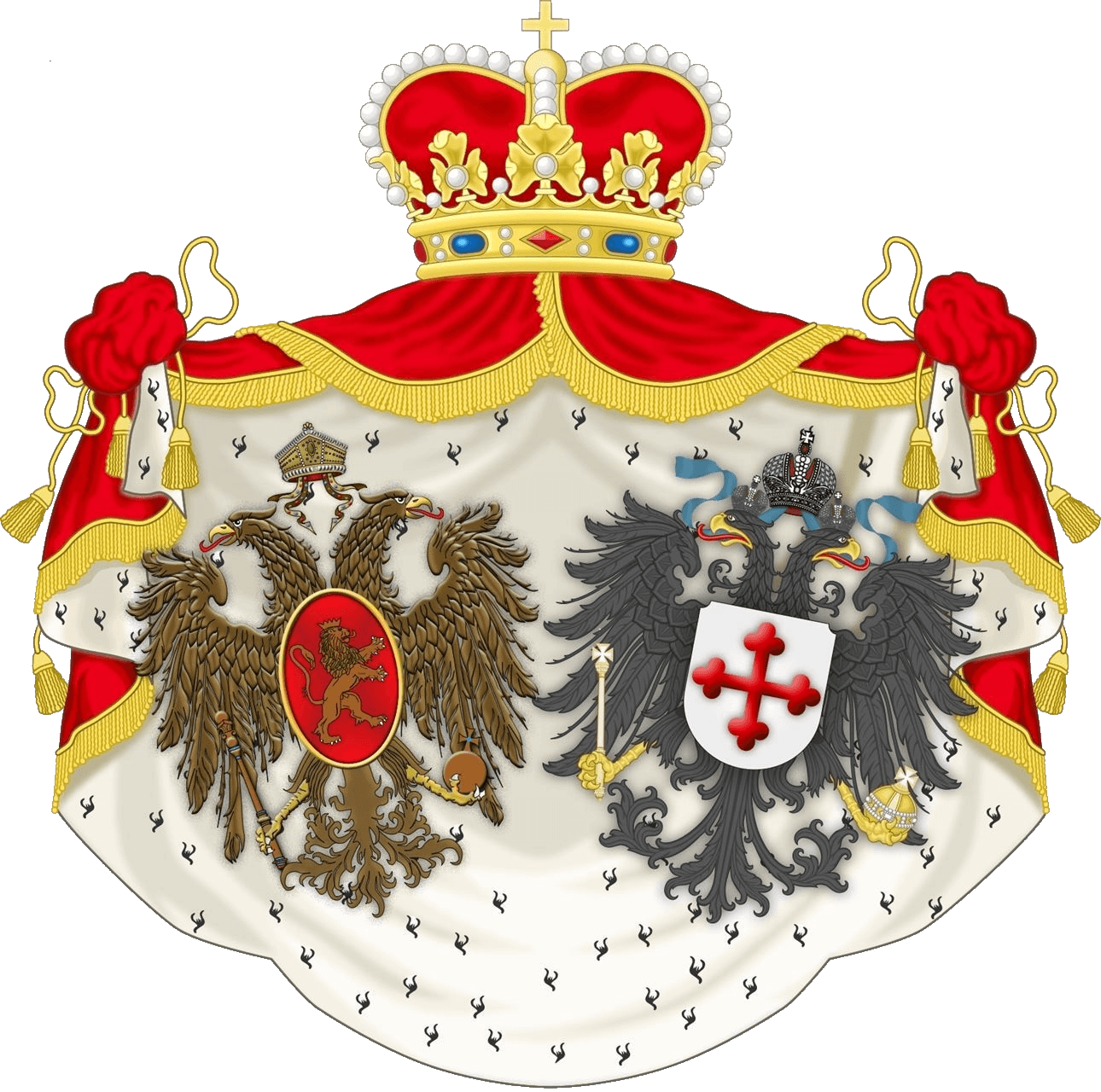
Our Origins: The Dynastic House & The Chivalric Order
The Sovereign and Royal House of the Principality of Cappadocia and its Royal Chapter represent the living evolution of a lineage that can rightly be called the oldest peerage in the world. As recorded in The Royal House—A Journey Through Time by H.G. Duke Gerhart Wilhelm Walch, A.M.D.P., Emperor Constantine the Great's foundation in 312 A.D. was both an act of commemoration and of vision: to honor loyalty, to enshrine Christian faith at the heart of nobility, and to establish a peerage rooted in service and guardianship.
At the same time, the Sovereign and Royal House of the Principality of Cappadocia was established alongside the Order. The Royal Order is chivalric, while the Royal House is dynastic—incorporating the Royal Order while extending into broader sovereign, cultural, academic, and philanthropic endeavors.
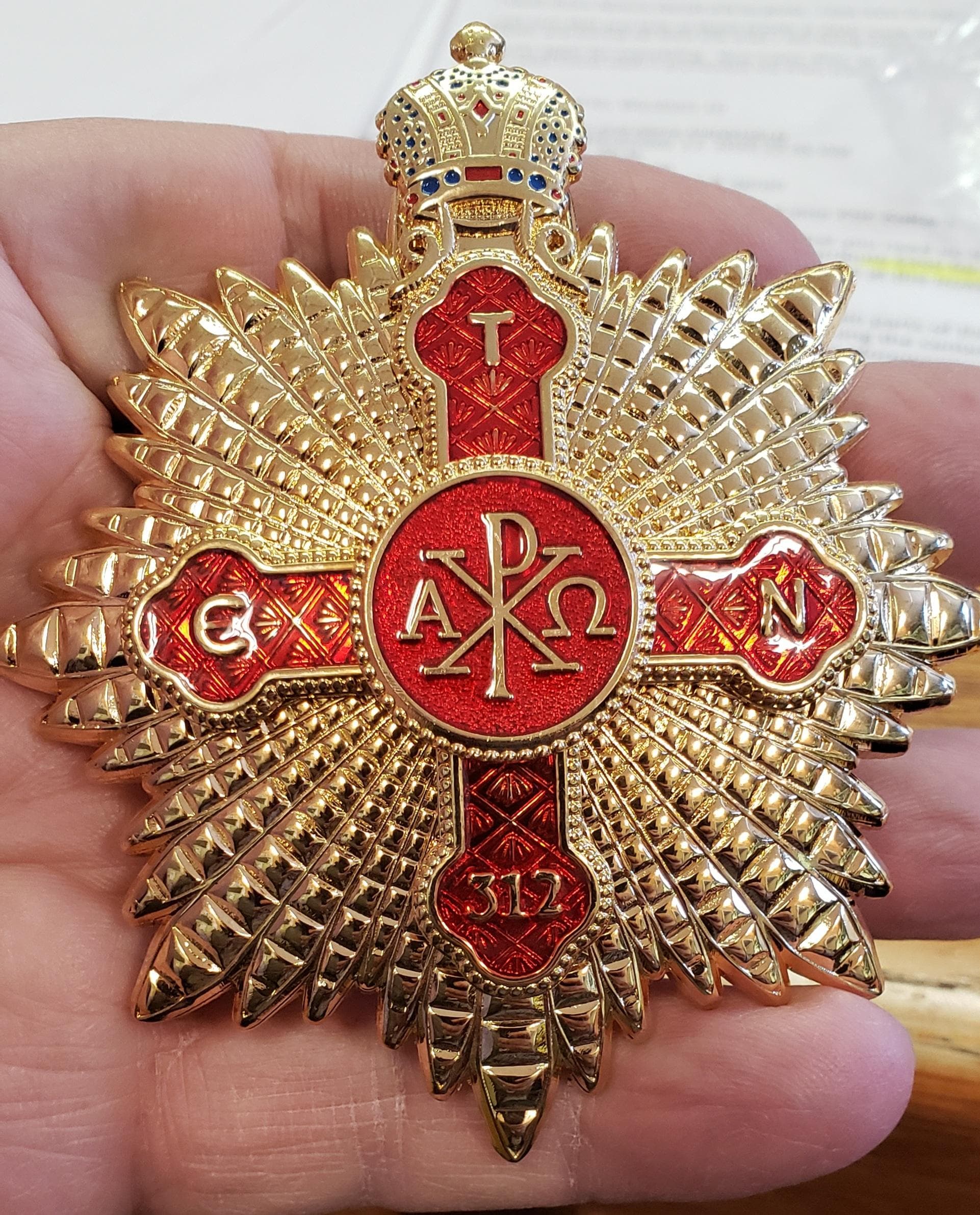
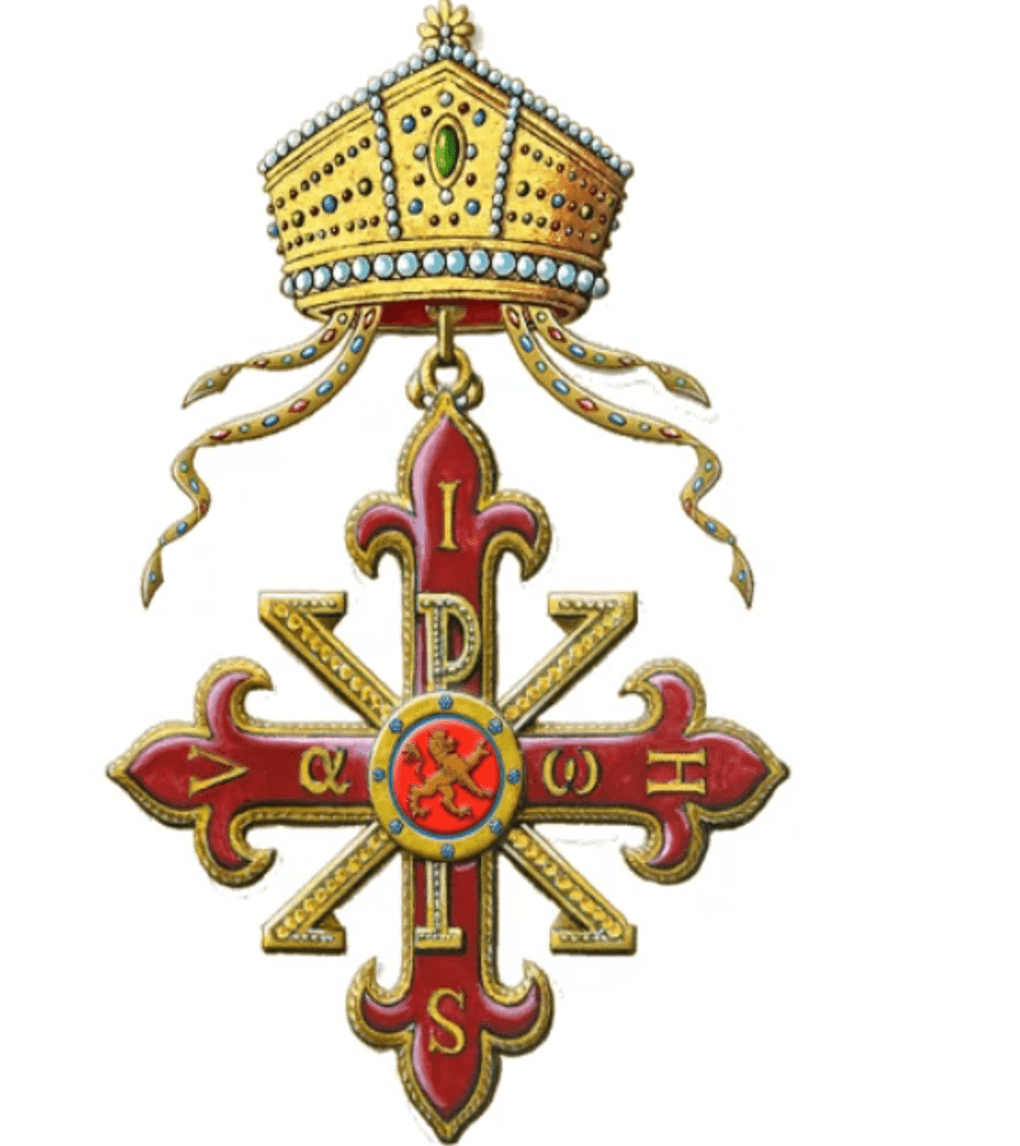 Imperial Cross (I·H·S·V)
Battle of the Milvian Bridge & The Vision
The Kingdom of Cappadocia was an independent Hellenistic-era state in central Asia Minor (modern-day Turkey) from approximately 331 B.C. to 17 A.D. Founded by King Ariarathes I after the fall of the Persian Empire, it was a rugged, inland region known for its feudal aristocracy and, later under Emperor Tiberius, as a strategic Roman province.
In 312 A.D., on the eve of the Battle of the Milvian Bridge over the Tiber River near Rome, Constantine prepared to confront his rival, Maxentius, for control of the Western Roman Empire. According to the chronicler Eusebius of Caesarea, Constantine beheld a radiant cross of light in the heavens above the sun bearing the Greek inscription “Εν Τούτῳ Νίκα” (rendered in Latin as “In Hoc Signo Vinces” — “In this sign, you will conquer”). Instructed in a dream that night to mark the sacred Chi-Rho (☧) Christogram on the shields and military standards of his soldiers, Constantine obeyed and won the battle decisively on October 28, 312 A.D.—followed within months by the Edict of Milan (313 A.D.) granting religious freedom across the Roman Empire.
As a reward to his victorious army, Constantine created the Sovereign Constantinian Order of Cappadocia after the victory at the Milvian Bridge on October 28, 312 A.D., appointing fifty of his bravest warriors as the founding members of the Order and bestowing upon the Order the ancient, 3,000+ year old Kingdom of Cappadocia (annexed by Rome in 17 A.D.), which the Order ruled for more than 1,100 years across the history of the Byzantine Empire until May 29, 1453.
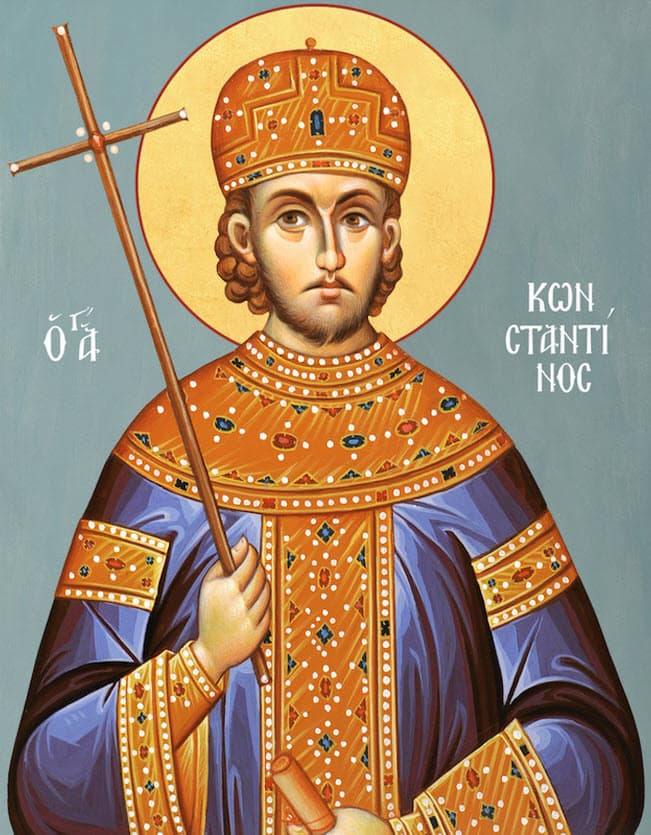
“At the time of his battle against Maxentius, Constantine saw with his own eyes the sign of the cross in the heavens, above the sun, and bearing the inscription, ‘In this sign, you will conquer.’ He and his army were struck with amazement at the sight, and upon victory, he recognized the power of Christ and embraced His faith.”
Lineage Milestones

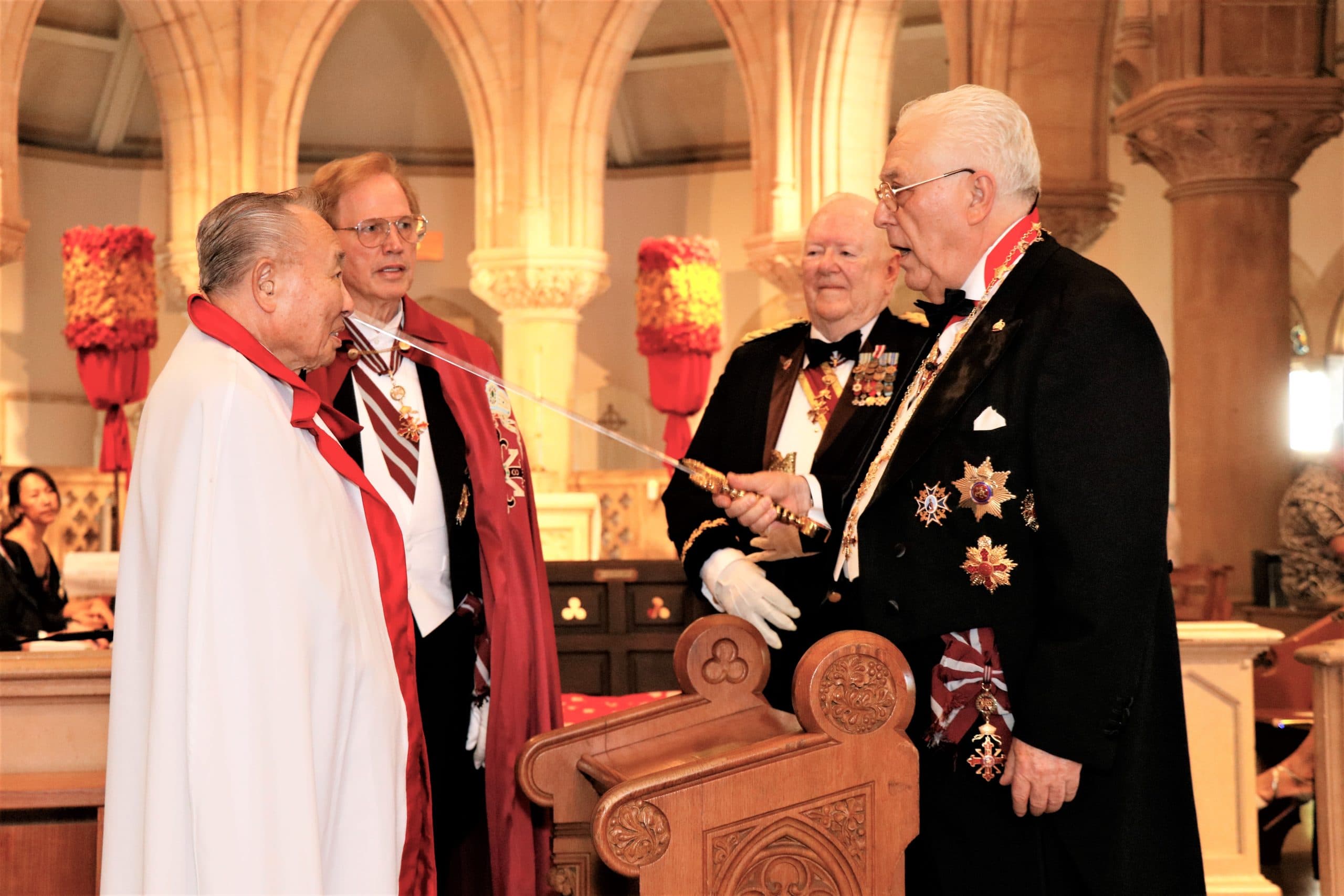
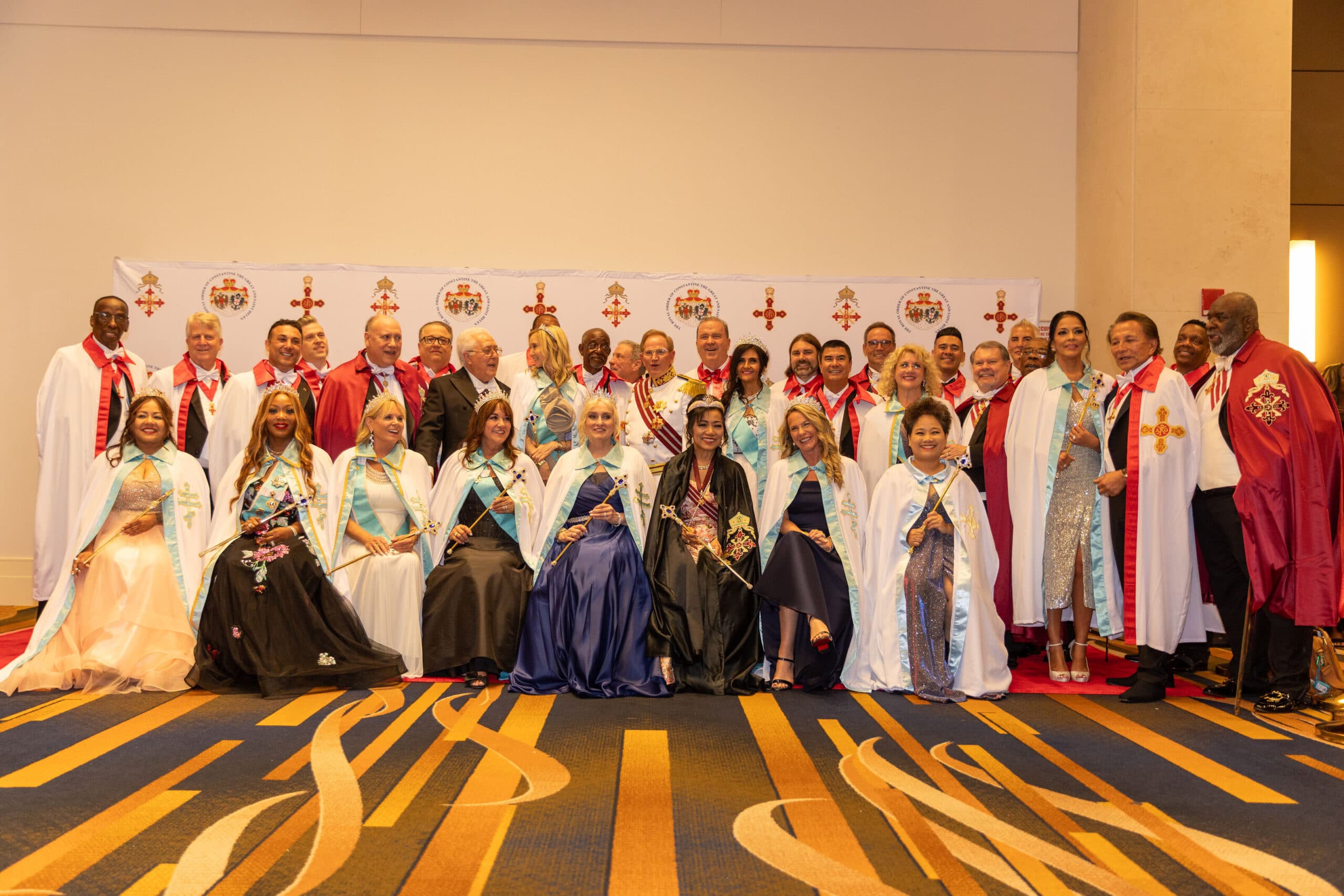
From Cappadocia to Constantinople & The Golden Knights
Following his victory over Licinius at the Battle of Chrysopolis on September 18, 324 A.D., Constantine selected ancient Byzantium on November 8, 324 A.D. On May 11, 330 A.D., Constantine the Great formally dedicated Constantinople (New Rome) as a new imperial capital of the Roman Empire, establishing the political and cultural foundation of the civilization later known as the Byzantine Empire, which endured for 1,123 years until May 29, 1453 A.D. (and renaming nearby Drepanum in Bithynia as Helenopolis in honor of his mother, Empress Saint Helena).
While the concept of “Noble” (Nobilis) existed in the Roman Republic around 300 B.C.—600 years before Milvian Bridge—Constantine's Roman imperial offices (Nobilissimus, Patricius, Dux, Comes, Eques) and Byzantine court dignities (Patrikios, Magistros, Doux, Kouropalates, and 13th-century Kavallarios) bridged Roman military rank and medieval European chivalry (where Knight, from Old English Cniht, developed in the 10th–12th centuries, and the Knights of the Sovereign and Royal House of Cappadocia were historically identified as “Golden Knights”). Under their guardianship flourished the Cappadocian Fathers—Saint Basil the Great, Saint Gregory of Nyssa, and Saint Gregory Nazianzen—Saint Basil's pioneering Basiliad hospital in Caesarea, and the subterranean sanctuary cities of Derinkuyu, Kaymaklı, and Göreme.
Across 1,123 years, the Sovereign Constantinian Order of Cappadocia ruled the 3,000+ year old Kingdom of Cappadocia until May 29, 1453, when Constantinople fell, the Byzantine Empire effectively ceased to exist, and its remnant territories passed ultimately into the Holy Roman Empire—while the westward migration of its scholars and nobles directly ignited the European Renaissance.
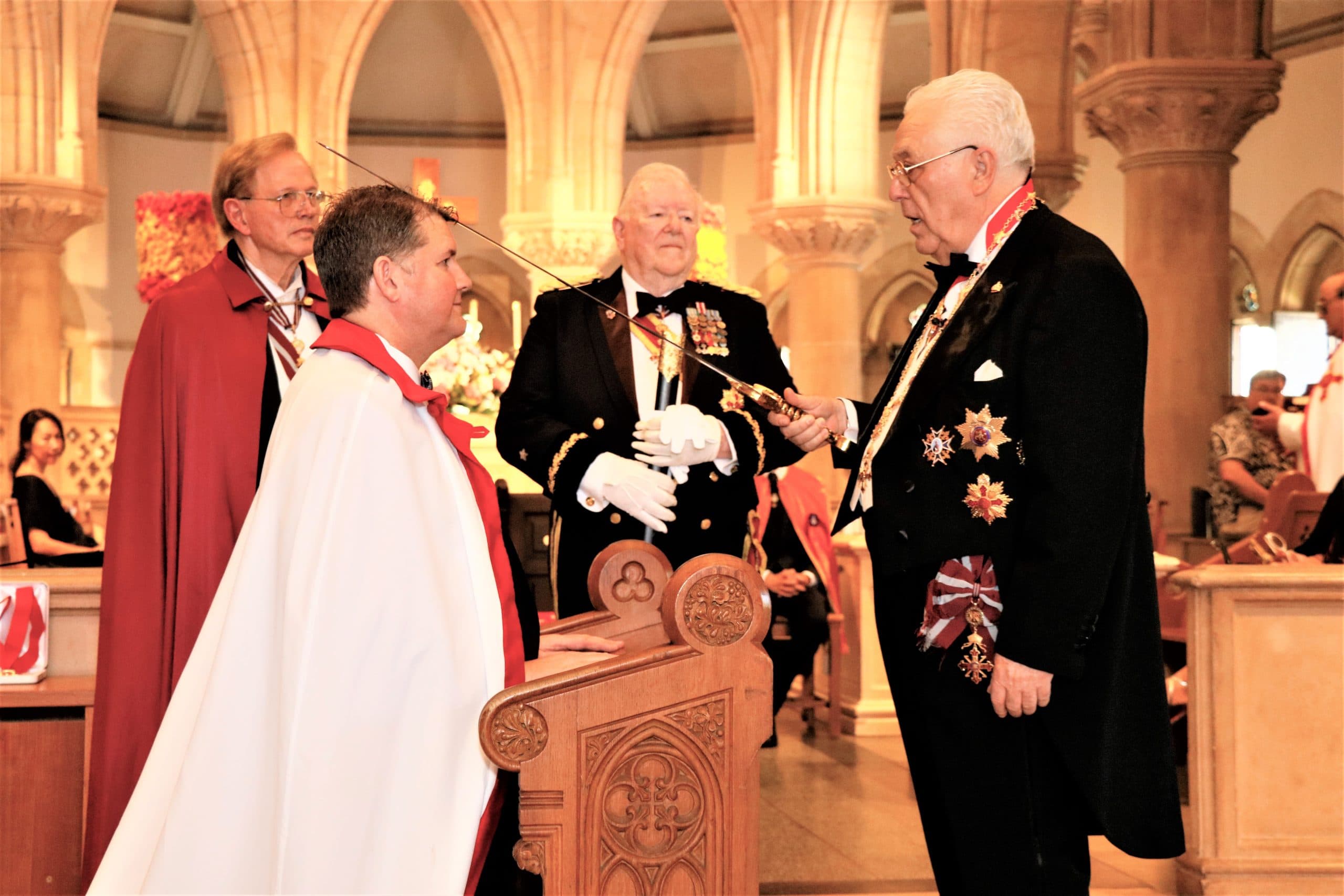
Evolution Through Time: From 1453 to the 2012 International Court Decree
After May 29, 1453 A.D., with the fall of Constantinople and the heroic death of Emperor Constantine XI Palaiologos—the last Eastern Roman Emperor and hereditary Prince of Cappadocia—the Byzantine Empire effectively ceased to exist, and its remnant territories and dynastic legacy became ultimately part of the Holy Roman Empire. The House entered a new phase: no longer tied to imperial territorial dominion, yet preserved through dynastic continuity and noble tradition under the protection of the Holy Roman Empire and European princely houses across the 16th and 17th centuries.
In the 1940s, amid a global reawakening of historical institutions, Prince Marciano II, Prince Grand Master and direct descendant of the Angelos-Constantinian line, formally reconstituted the imperial Constantinian Order of Cappadocia, reinstating its traditional titles and reaffirming its spiritual and charitable mission.
In 2003, the Royal Order of Constantine the Great and Saint Helen was incorporated in the State of California and qualified as a Section 501(c)(3) charity (founded by H.G. Duke Michael Schmickrath, succeeded by H.G. Duke Michael Spencer Teilmann, Brig. Gen. Ret., and adopted under the sovereign protection of H.R.H. Prince Rafael Andujar y Vilches, Ph.D.).
In October 2012, by decree of the International Civil Court, Permanent Organ of the European Court of Arbitral Justice of Ragusa (Judgment No. 5/2012, October 30, 2012, Ragusa, Italy), the Court held that the Sovereign Constantinian Order of Cappadocia is legitimately a subject of International Law—independent, dynastic, religious, lay, military, knightly, and noble, in all ways identical to a foreign State, possessing full Fons Honorum and the capacity to assert its rights under international law. As a result, the Royal House and its affiliated orders—the Royal Order of Constantine the Great and Saint Helen and the Royal and Military Order of Saint Charles (founded 1738)—stand as the legitimate internationally adjudicated legacy of the Imperial Order of Constantine.
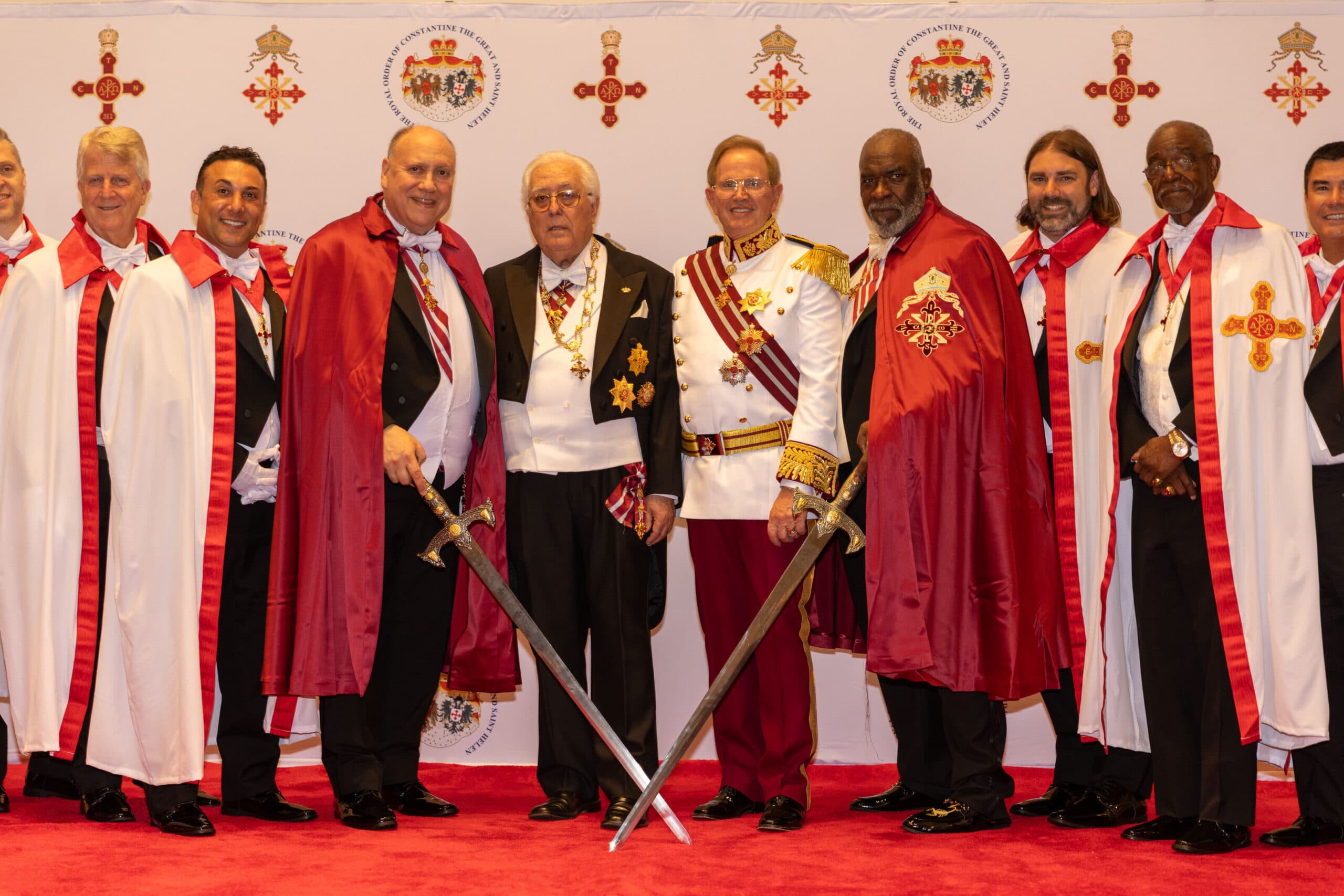
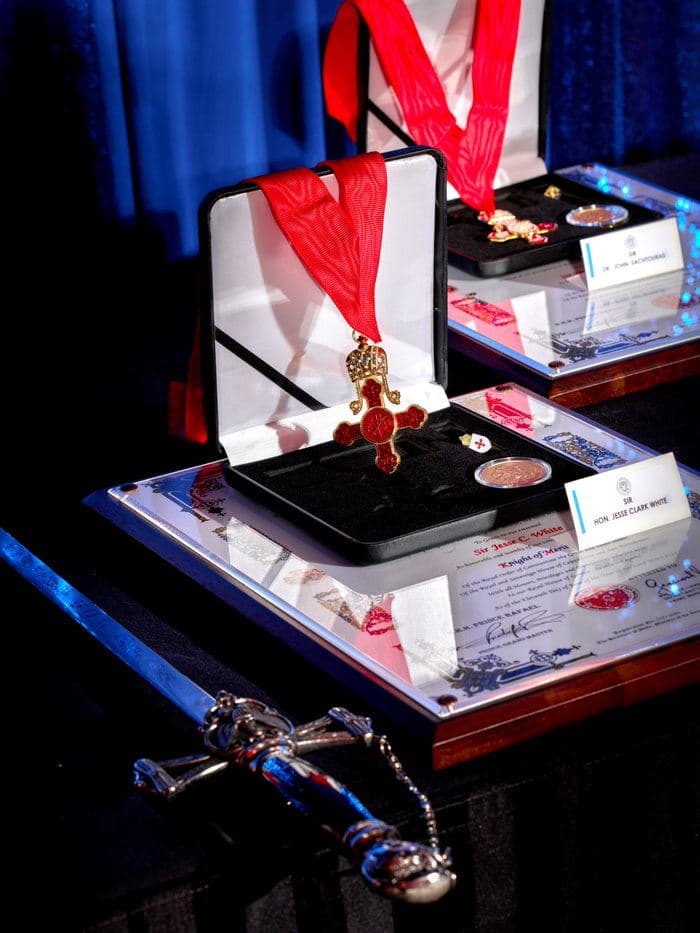
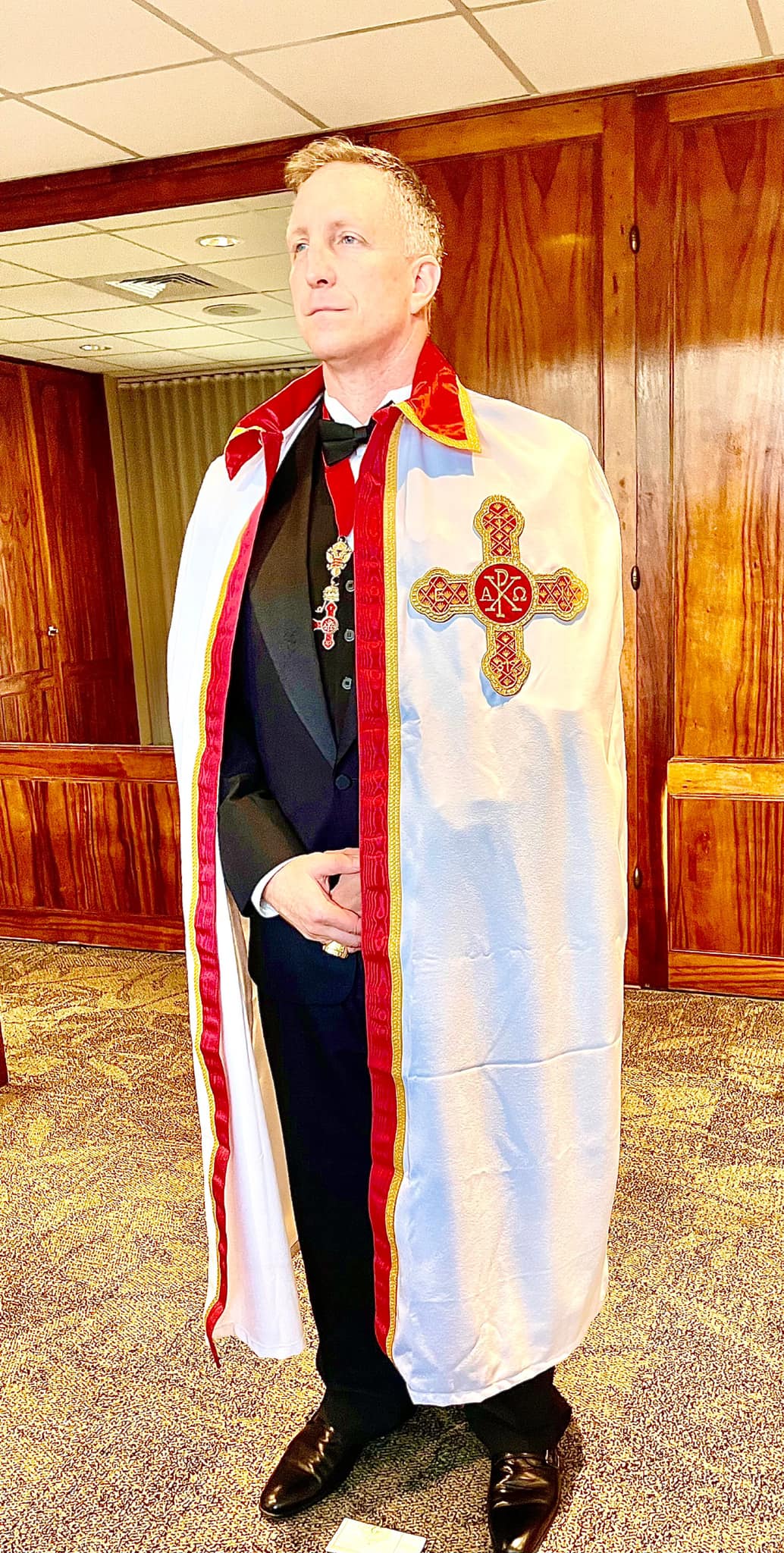
A Gateway into the Order: The Royal Chapter in History
Historically, noble titles and knighthoods were often conferred directly. In the modern era, however, the Royal House established The Royal Chapter as a structured path of preparation—an opportunity for new members to learn the traditions, values, and responsibilities of nobility before being elevated to Knighthood or Damehood.
A Community of Service
Provides a place of belonging for members who are not yet knights or dames—serving on committees, engaging in philanthropy, and proving that nobility is service in action.
Education & Formation
Educates and guides members in the history, customs, and ideals of the Sovereign and Royal House of Cappadocia, cultivating continuity with 312 A.D.
Strengthening the Order
Expands the House’s organizational foundation, involving accomplished leaders worldwide to broaden our charitable works and prepare the next generation.
A Living Bridge
Connects the Order’s storied Byzantine past with its 21st-century global future, welcoming men, women, Squires, and Ladies in Waiting into active stewardship.
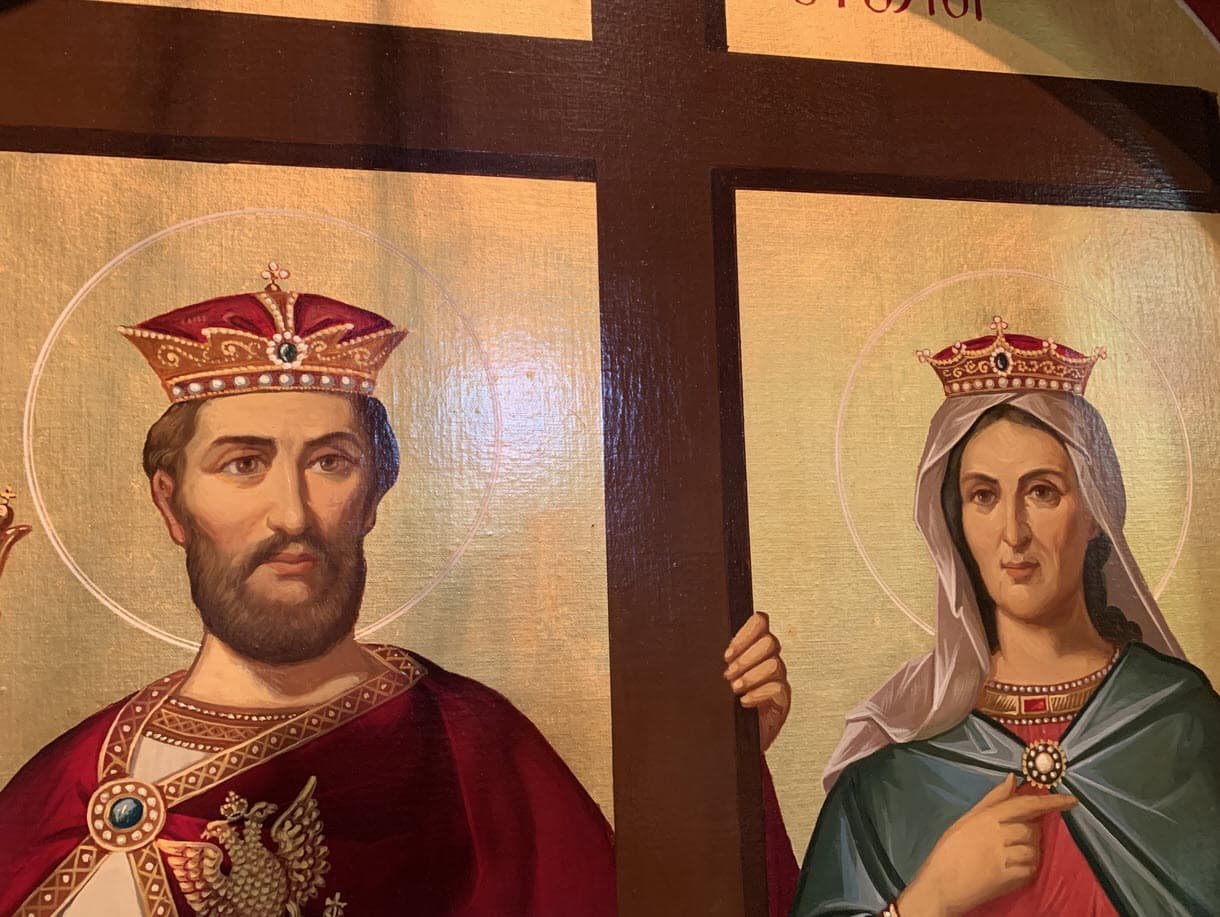
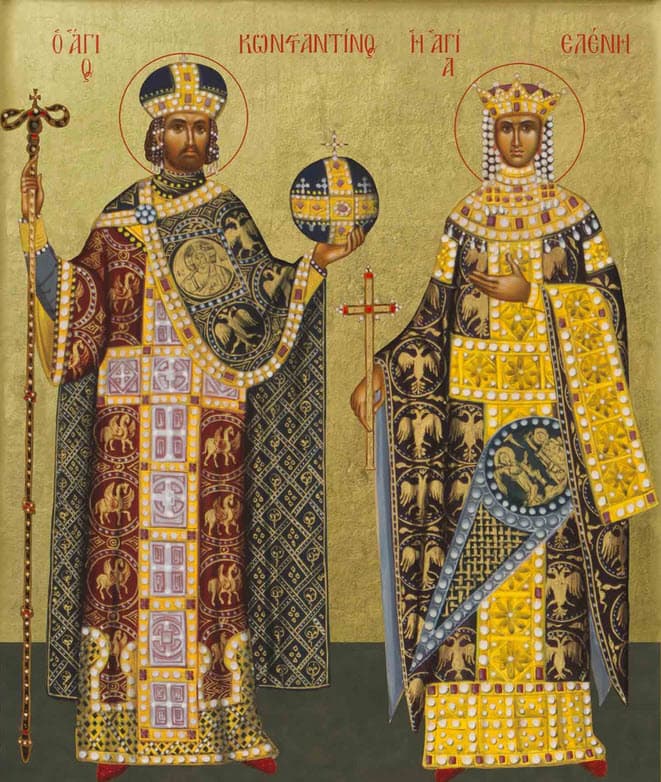
Patron Saints: Emperor Constantine I & Empress Saint Helen
The Royal Order honors Saint Constantine the Great and his mother, Empress Saint Helen, as its celestial patrons—embodying the union of principled leadership and selfless humanitarian compassion.
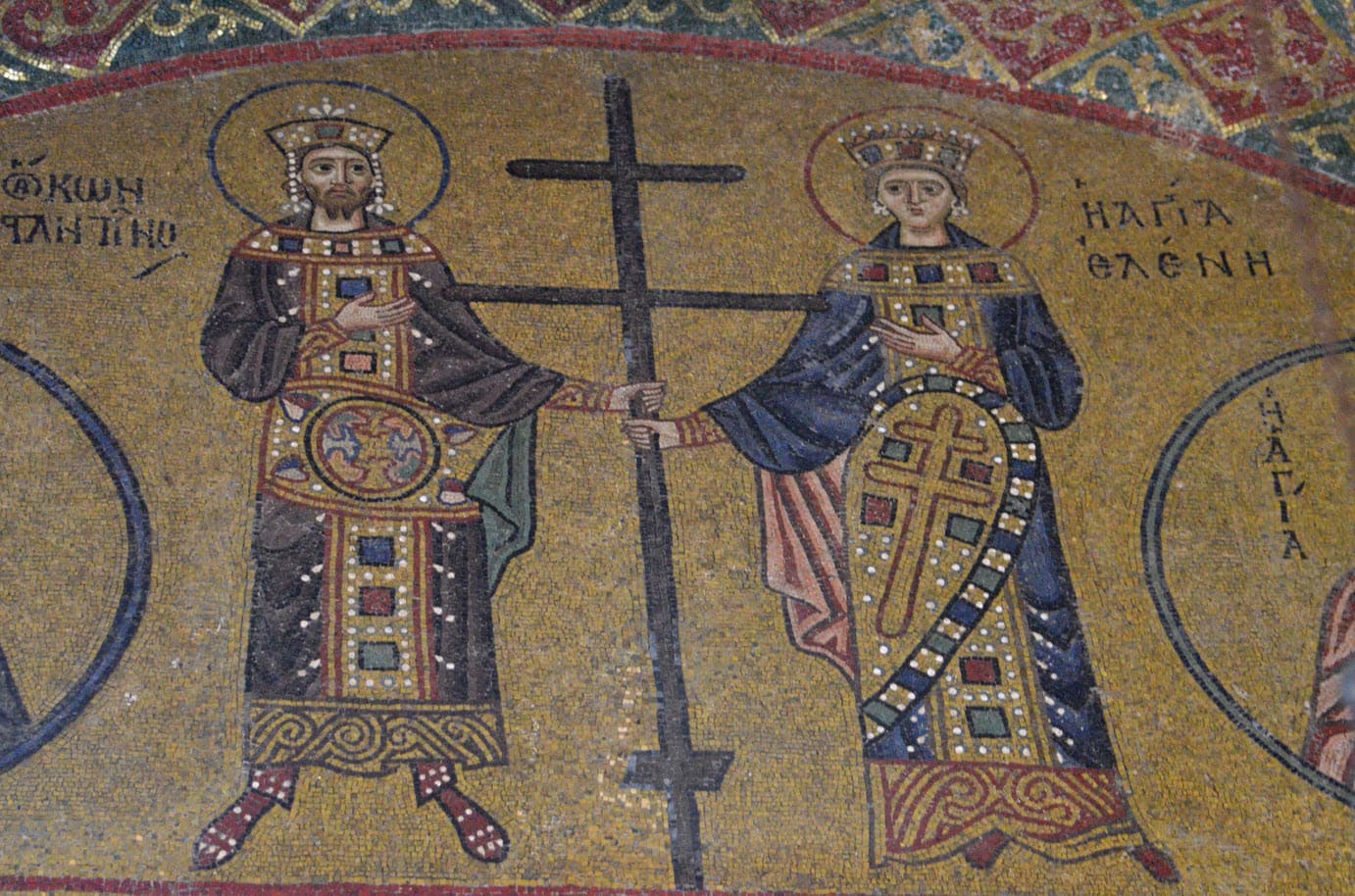
Emperor Constantine the Great
Born in Naissus to Constantius Chlorus and Helena, Constantine rose to unite the Roman Empire after his triumph at the Milvian Bridge (312 A.D.). Through the Edict of Milan (313 A.D.), the convocation of the First Council of Nicaea (325 A.D.), and the founding of Constantinople (330 A.D.), he established a lasting precedent for governance guided by conscience, religious freedom, and Christian unity.
As the first Grand Master of the Constantinian Order of Cappadocia, his charge to his knights—to defend the vulnerable, feed the poor, and uphold moral integrity—remains our foundational charter.
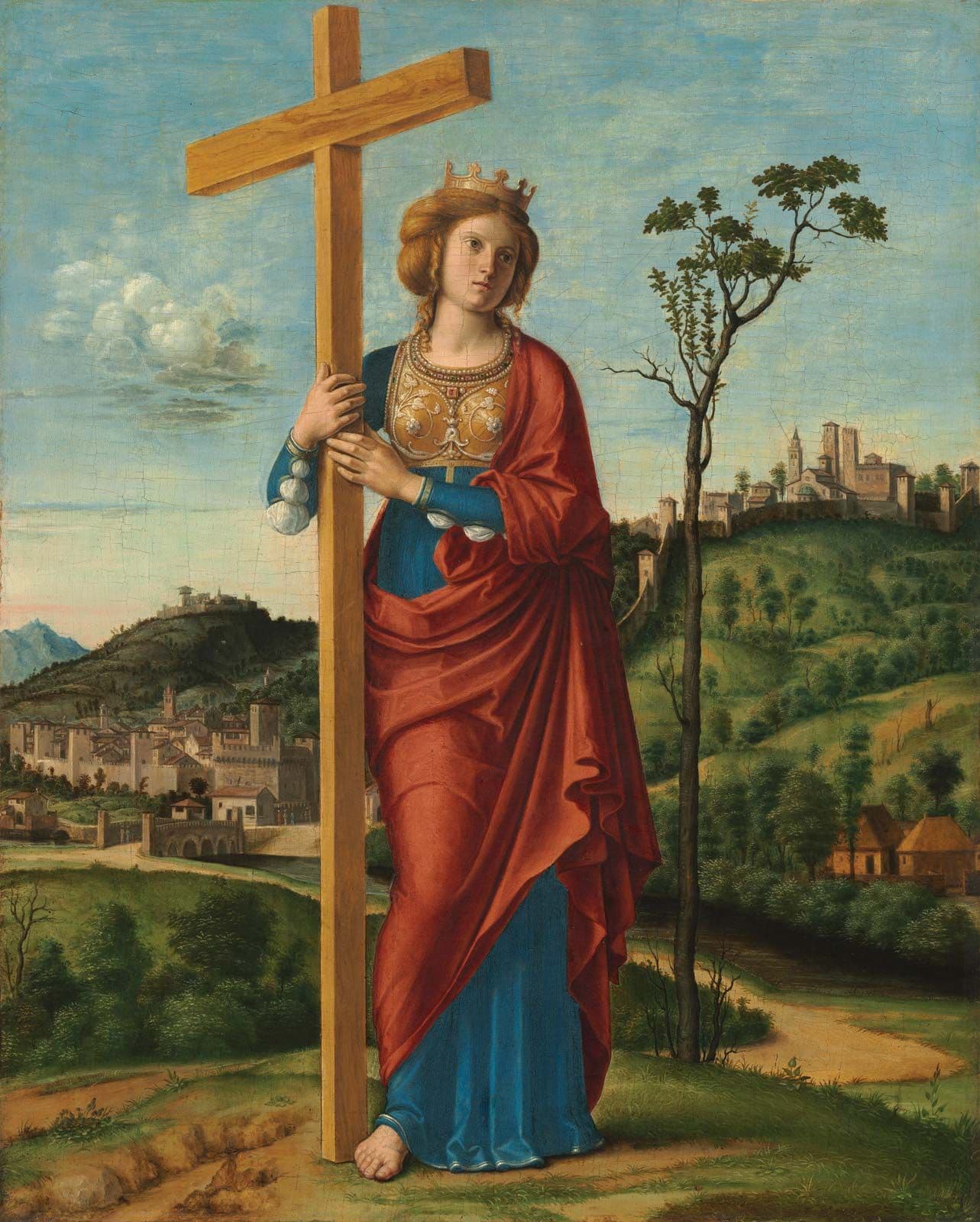
Empress Saint Helen (Augusta Helena)
Born of humble origins in Drepanum, Asia Minor, Helena endured years of abandonment and exile after Constantius Chlorus divorced her in 294 A.D. for political ambition. Upon ascending the throne in 306 A.D., Constantine elevated his mother as Empress (Augusta). At nearly 80 years of age (324–326 A.D.), Saint Helen led her historic pilgrimage to Jerusalem, uncovering the True Cross at Golgotha and founding the Churches of the Holy Sepulchre and the Nativity.
Having experienced abandonment firsthand, Saint Helen devoted the imperial treasury to prisoners, widows, orphans, and the destitute—directly inspiring our flagship Saint Helen's Homes for Women and Children.
The Royal Constantinian Academy of Arts and Sciences
The Royal Constantinian Academy of Arts and Sciences is the newest jewel of the Sovereign and Royal House of Cappadocia, created to honor and expand the legacy of enlightenment begun under Emperor Constantine the Great and Empress Saint Helen. The Academy stands as a bridge between the wisdom of the past and the promise of the future, uniting scholars, artists, innovators, and visionaries from around the world.
Mission of the Academy
The mission of the Academy is to advance knowledge, cultivate creativity, and inspire service to humanity. Guided by the timeless virtues of faith, honor, and truth, the Academy nurtures the arts and sciences as twin pillars of civilization, each enriching the other to uplift societies and strengthen the human spirit.
In uniting tradition with innovation, the Academy embodies the vision of Constantine and Saint Helen—an enduring commitment to faith, reason, and service to humanity.
Purpose of the Academy
The Royal Constantinian Academy of Arts and Sciences exists to:
- Provide a forum where scholars, artists, and practitioners can collaborate to address humanity's greatest challenges.
- Preserve the sacred, classical, and cultural heritage of Cappadocia and Christendom.
- Foster innovation in harmony with enduring values of beauty, truth, virtue, and faith.
- Encourage international exchange, mentorship, and the sharing of knowledge for the common good.
Five Pillars & Goals of the Academy
Academic Traditions & Honors
The Academy draws inspiration from the great cultural and intellectual circles of antiquity, adapting these traditions to a modern world:
Sovereign Magistracy & Chancellery Cabinet
As chronicled in The Royal House: A Journey Through Time (ISBN 979-8-218-99750-2), the Principality of Cappadocia and its Orders of Chivalry are governed by the Sovereign, the Royal Cabinet, and the Executive Board:
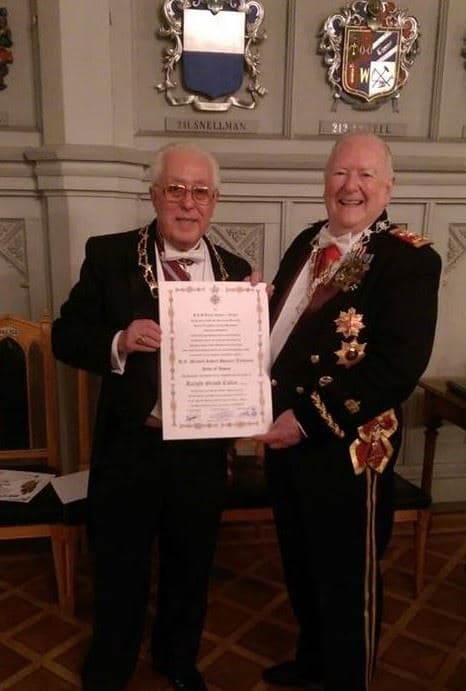
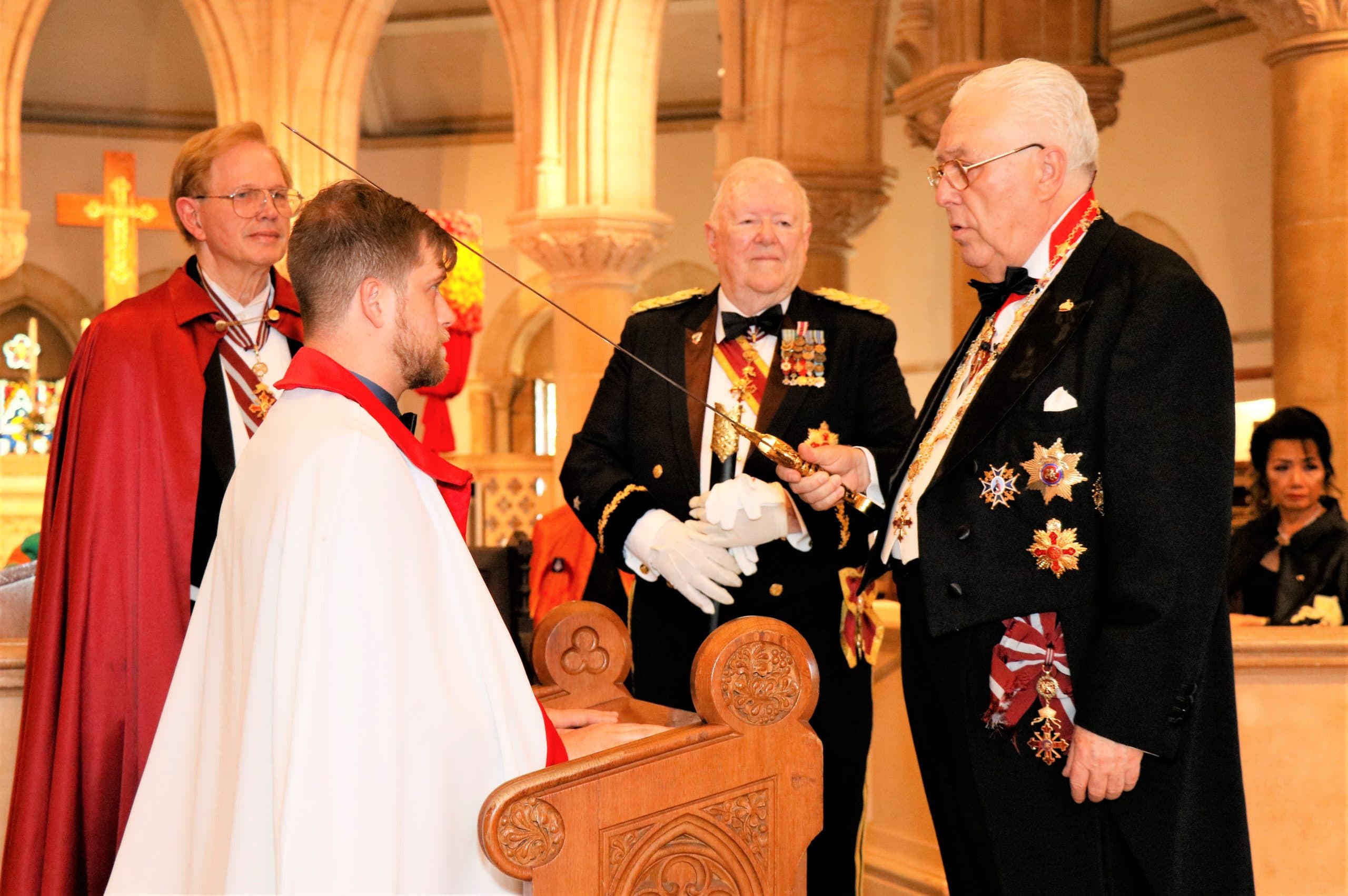
H.R.H. Prince Rafael Andujar y Vilches, Ph.D.
Prince of Cappadocia & San Bartolomeo, Duke of Sperlinga, Count of Edessa, Prince Grand Master of the Orders of Chivalry
H.G. Duke Gerhart Wilhelm Walch, AMDP
Duke of Styria of Cappadocia, Secretary of State, Deputy Grand Master & Author of A Journey Through Time
H.G. Duchess Nancy Atmospera-Walch, DNP
Duchess of Vigan of Cappadocia, Chief Executive Officer & CNO of St. Helen’s Homes for Women and Girls, Grand Prior of Hawai’i
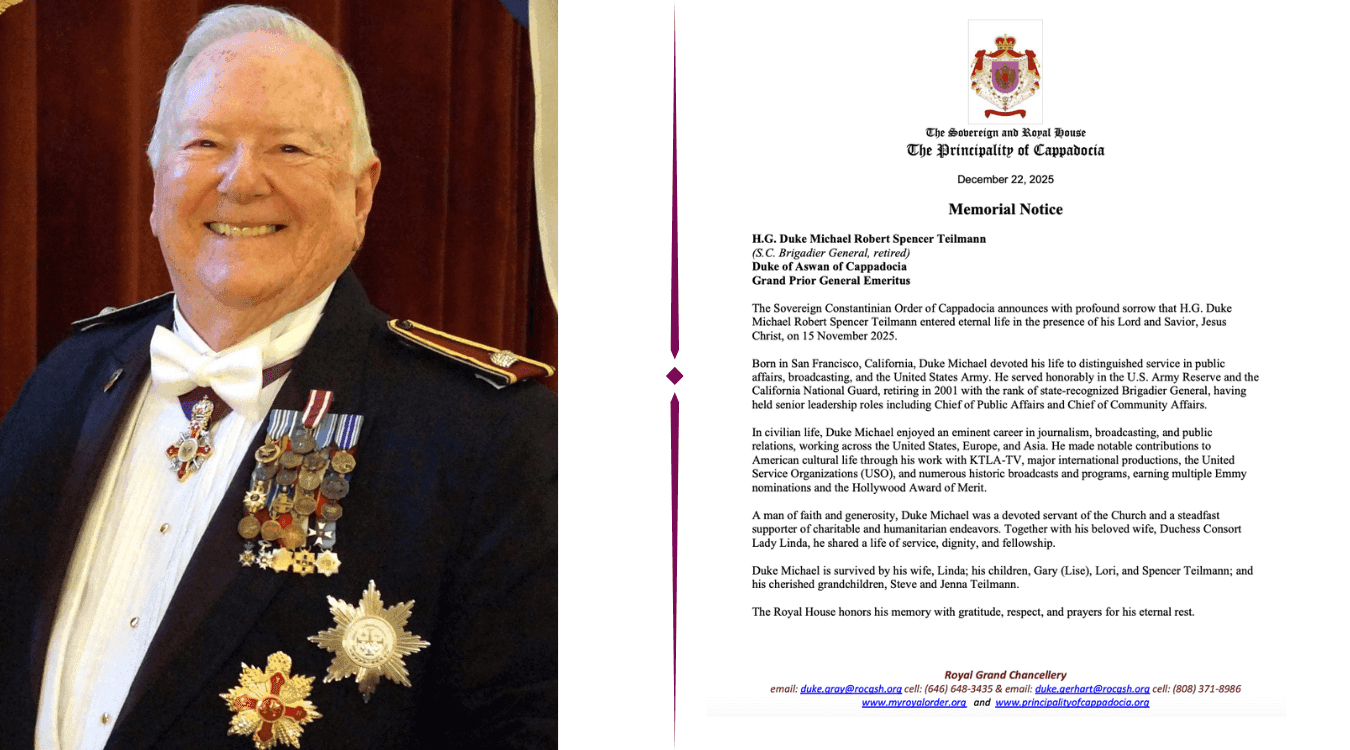
H.G. Duke Michael Spencer Teilmann (Brig. Gen. Ret.)
Duke of Aswan of Cappadocia & Member of the Executive Board of the Orders of Chivalry (with H.E. Duchess Consort Linda Teilmann, DGC)
H.E. Baron Sidney Leluan III
Baron of Guernsey of Cappadocia, Grand Prior General for Central & Latin America (with H.E. Baroness Consort Debbie Leluan, DGC)
H.E. Baron Dr. James Dentley III, D.Div.
Baron of St. James of Cappadocia & Grand Prior of Illinois (with H.E. Baroness Consort Dr. Kara Scott Dentley, Ph.D., DGC)
H.E. Marquis Ron Wilhelm, Esq.
Marquis of Wessex of Cappadocia & Member of the Executive Board
H.E. Sir Dustin T. Verity, CPA, KGC
Secretary of State, Member of the Executive Board & Chief Financial Steward of the Royal Order
H.E. Baron James Gray Robinson, Esq.
Baron of Scotland of Cappadocia (with H.E. Baroness Consort Linda Patrina Giangreco, DC, Regent of the Royal Constantinian Academy)
H.E. Baron Alec Stern
Baron of Boston of Cappadocia & Senior Advisor to the Grand Magistracy
H.E. Sir Thomas Mount, D.Div., Bishop, KGC
Chief Ecclesiastical & Spiritual Prelate of the Royal Order
H.E. Sir Don Boyer, KGC & Dame Melinda Boyer, DGC
Leading the Western United States Grand Priory alongside Prior of Los Angeles Sir Kaya Redford, KC